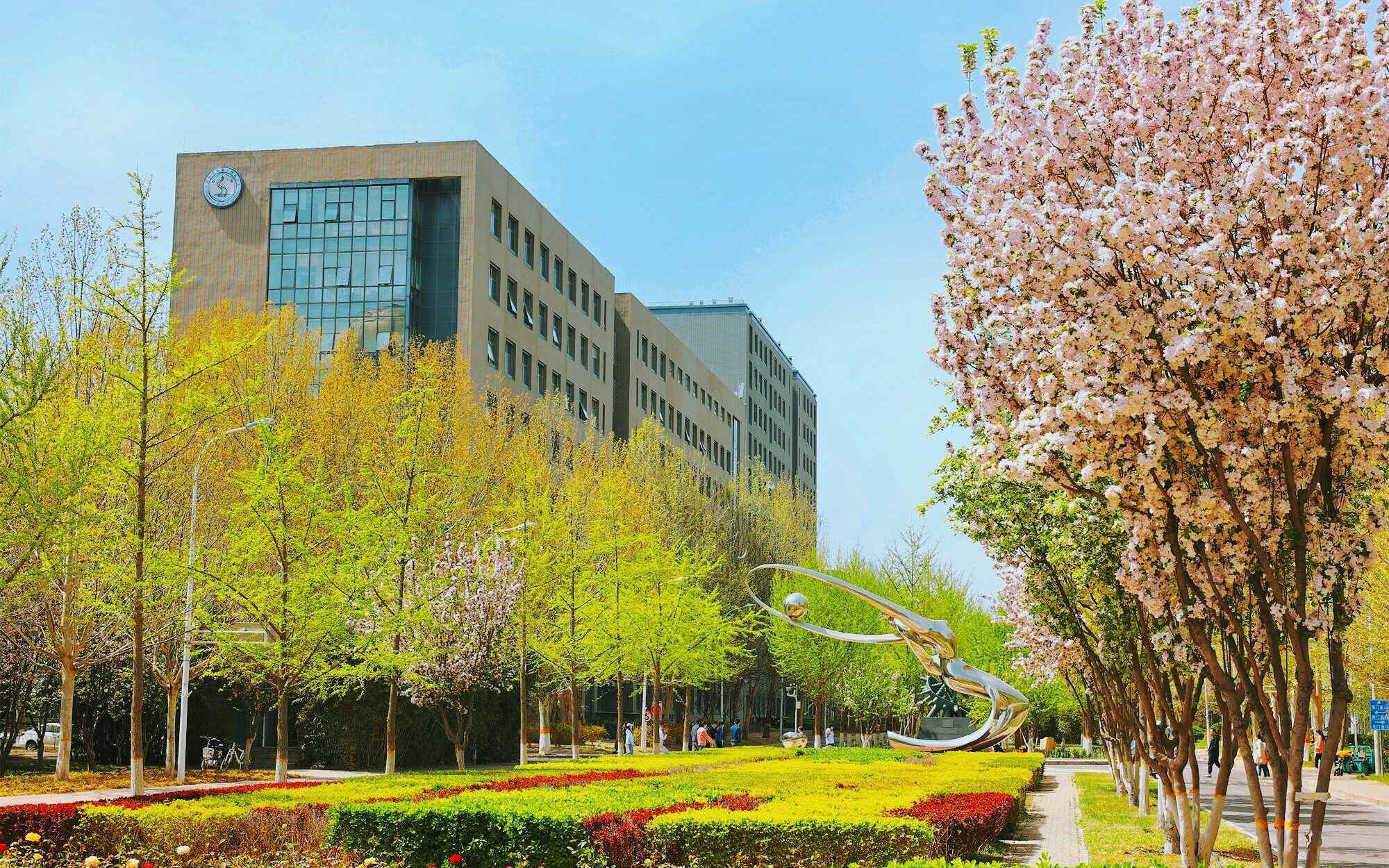
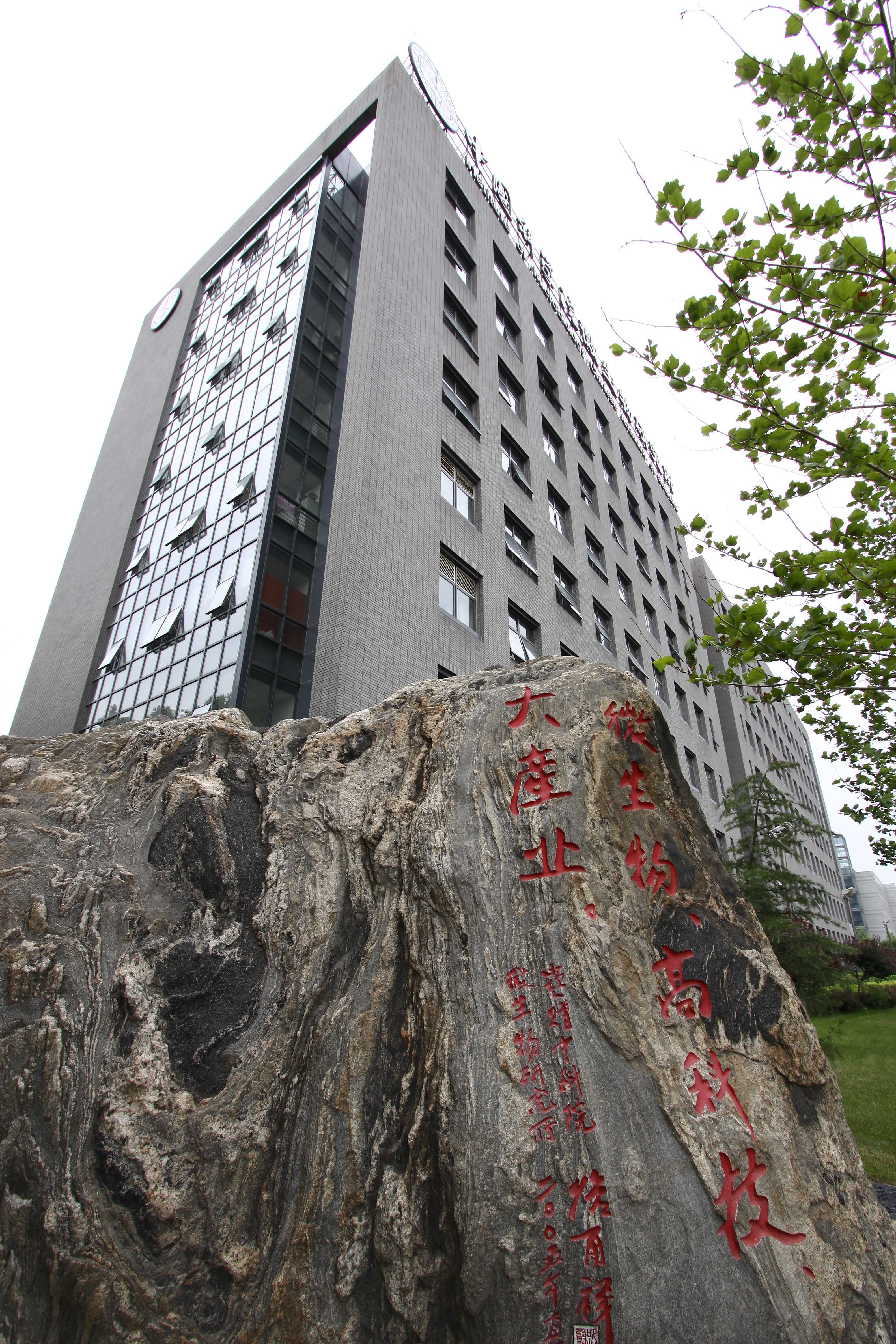
The Institute of Microbiology of the Chinese Academy of Sciences (IMCAS) is the largest microbiological research institution in China. It was founded on December 3, 1958, through the merger of the Institute of Applied Mycology and the Beijing Laboratories of Microbiology, both of which were affiliated to the Chinese Academy of Sciences (CAS). IMCAS was initially located in Zhongguancun, Haidian District, Beijing. In early 2007, the major part of the Institute was relocated to the CAS Life Science Park near the Olympic Village in Chaoyang District, Beijing. After over 60 years of development, it has become the nation's largest comprehensive research institution of microbiological science.
In the first 18 years from 1958 to 1976, IMCAS had eight research divisions covering the following disciplines: mycology, virology, physiology and biochemistry, biophysics, genetics, agricultural microbiology, industrial microbiology and geomicrobiology. During that period of time, great efforts were made to survey microbial resources and to study microbial metabolisms and genetic variations. A large number of microbial strains were found and improved for use in fermentation industries, agriculture and geological survey.
In 1978, in accordance with the strategic restructuring of CAS, IMCAS underwent institutional reorganization and set up eight divisions: divisions of fungal classification, bacterial classification, virology, microbial ecology, microbial metabolism, microbial enzymology, microbial genetics and microbial strain preservation. At the same time, new research support systems, including a fermentation pilot plant, a core facility, a radiation safety laboratory and an information center, were set up. In the following two decades, IMCAS made great strides in both basic and applied research, which were represented by a large number of scientific achievements of great significance to economic and social development.
In 1998, the CAS Knowledge Innovation Project was officially launched. Upon approval by CAS, IMCAS entered the Project on August 15, 2001, marking the beginning of a new phase in its history. With microbial resources, molecular microbiology and microbial biotechnology as three main areas of research, the Institute reshuffled its research divisions to establish a research center for microbial resources, a research center for molecular microbiology and a research center for microbial biotechnology. In 2004, IMCAS recognized microbial resources, industrial microbiology and pathogenic microbiology as its three areas of research, and set up nine research centers in the three areas. These include research centers for microbial resources, extremophiles, energy and industrial biotechnology, microbial metabolic engineering, environmental biotechnology, agricultural biotechnology, molecular virology and molecular immunology, and a joint research center for microbial genomics.
Since 2008, the Institute has endeavored to reorganize research and development activities into an innovative value chain with a biological resource center, a scientific research system and a technology transfer and transformation center as three interconnected units, and to carry out basic, strategic and prospective research in the areas of microbial resources, microbial biotechnology and pathogenic microbiology and immunology to meet national needs in industrial upgrading, agricultural development, human health, environmental protection, etc. At present, the scientific research system of IMCAS is comprised of 7 laboratories: State Key Laboratory of Microbial Diversity and Innovative Utilization, Laboratory of Microbial Resources and Biotechnology, Mycology and Innovative Technology Laboratory, Department of Agri-microbiomics and Biotechnology, Department of Microbial Physiological & Metabolic Engineering, Key Laboratory of Pathogen Microbiology and Immunology, and Laboratory of Microbiome and Microecological Technology.
IMCAS has built a comprehensive and high-quality resource support system to underpin its research and academic endeavors. It houses Asia’s largest fungal herbarium (boasting over 580,000 specimens) and China’s largest General Microbiological Culture Collection, which comprises more than 15,500 microbial species (encompassing over 115,000 strains). In addition, it operates a microbiological information center, a core facility, and other supporting platforms. Currently affiliated with IMCAS are three national academic societies: the Chinese Society of Microbiology (CSM), the Chinese Mycology Society, and the Chinese Society of Biotechnology (CSBT). In collaboration with these societies, IMCAS publishes three international journals: mLife (Microbiology), hLife (Health Sciences), and Mycology (Fungal Biology). Complementing these research and academic resources, it also maintains a specialized library with over 20,000 physical books and an electronic library featuring more than 130,000 Chinese and English e-books.
The Institute also attaches great importance to cooperation with international scientific community. In 2010, IMCAS was elected to be the host institute of the World Data Center for Microorganisms. In 2012, IMCAS cooperated with Royal Holloway, University of London and launched Fungal Names, an international fungal names registration website and a Chinese fungal species database. In 2013, the CAS-TWAS Biotechnology Center of Excellence was established at IMCAS. Each year, it organizes several international meetings in microbiology to further promote communication and exchanges in the international community. In 2018, IMCAS hosted another CAS-TWAS Center of Excellence, the CAS-TWAS Center of Excellence for Emerging Infectious Diseases, to strengthen global infectious disease preparedness. There are 3 International joint laboratory in IMCAS: China-Japan Joint Laboratory of Molecular Immunology and Molecular Microbiology, China-Thailand Laboratory on Microbial Biotechnology, and China-Uzbekistan Joint Laboratory on Microbial Resource & Biotechnology.
IMCAS employs more than 490 staff members, of whom more than 288 are researchers including five CAS academicians. There are nearly 600 graduate students at IMCAS.
Through over six decades of unflagging efforts, IMCAS has developed into a comprehensive microbiological research institution with rich heritage, great strength and international reputation.